
For landlords in Chingford, the period between tenants is often stressful. Every empty day can mean lost rental income, delayed viewings, and additional pressure to prepare the property quickly for the next occupant.
In many cases, the biggest delay is not repainting or repairs. It is the amount of waste left behind after tenants move out.
Old mattresses, broken furniture, black bags, unwanted appliances, damaged shelving, food waste, and abandoned belongings can quickly turn a straightforward turnover into a time-consuming clearance job.
Even properties that initially look tidy often reveal hidden waste inside cupboards, lofts, sheds, or communal areas once the tenant has fully vacated. That is why fast and reliable end of tenancy waste removal matters so much for landlords managing properties in E4.
Why Is Waste Removal So Important Between Tenancies?

Most landlords focus first on inspections, cleaning, and deposit discussions after a tenant leaves. But leftover waste can slow down every other stage of the turnaround process.
Viewings become harder to arrange, cleaners cannot work efficiently, and maintenance teams may struggle to access rooms properly while rubbish remains inside the property.
The longer waste sits inside a vacant property, the longer the property stays off the rental market. For landlords with multiple properties, delays quickly become expensive.
| Common Delay | How It Affects Landlords |
| Leftover furniture | Slows down cleaning and decorating |
| Black bags and household waste | Makes properties look neglected |
| Garden rubbish | Reduces kerb appeal during viewings |
| White goods and appliances | Creates disposal problems |
| Bulky waste in communal areas | Risks complaints from neighbours |
A quick clearance often helps landlords move immediately into cleaning, maintenance, photography, and tenant viewings without unnecessary downtime.
What Type of Waste Is Commonly Left Behind by Tenants?
End of tenancy waste varies depending on the tenant and property type. Student lets, family homes, shared houses, and furnished rentals all create different clearance challenges.
One-bedroom flats may mainly contain bags of unwanted clothing and household rubbish, while larger family properties often involve bulky furniture, damaged appliances, or years of accumulated storage.
Some of the most common waste removal jobs in Chingford include:
| Common End of Tenancy Waste | Frequently Found In |
| Mattresses and beds | Bedrooms |
| Sofas and wardrobes | Living rooms |
| Fridges and cookers | Kitchens |
| Black bags and loose rubbish | Throughout the property |
| Garden waste | Outdoor areas and sheds |
| Broken shelving and furniture | Garages and storage rooms |
Many landlords are surprised by how much waste remains once tenants have officially moved out. Empty properties often reveal hidden clutter that was previously covered by furniture or stored away out of sight.
Why Do Landlords Often Need Same-Day Waste Removal?

Timing is critical between tenancies. If a new tenant is scheduled to move in within days, landlords usually cannot afford to spend an entire week arranging skip hire, transporting waste themselves, or waiting for council collection dates. Fast rubbish removal helps landlords regain control of the property immediately.
This is especially important when:
- New tenants are already booked
- Letting agents need marketing photos
- Contractors are waiting to begin work
- Cleaning teams are scheduled
- Viewings are arranged within days
In busy rental areas around Chingford, losing even one or two weeks between tenants can significantly affect annual rental income.
That is why many landlords prefer a complete man-and-van clearance service where waste is removed in a single visit without requiring skips or multiple collections.
How Much Does End of Tenancy Waste Removal Usually Cost?
The cost depends mainly on how much rubbish is left inside the property. Smaller flats with a few bags and light furniture may only require a small or light load clearance, while heavily cluttered properties may need a large load or full van service.
| Load Size | Typical End of Tenancy Waste | Price* |
| Small Load | Bags of rubbish and light clutter | £60 |
| Light Load | Small furniture and household waste | £150 |
| Medium Load | Multi-room rubbish and appliances | £240 |
| Large Load | Bulky furniture and larger clearances | £320 |
| Full Van | Full property clearances | £420 |
These prices already include labour, lifting and loading, transport, and licensed disposal. For landlords, clear pricing matters because it helps avoid unexpected costs during an already expensive property turnaround period.
Why Is Skip Hire Often Less Practical for Landlords?
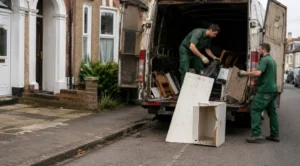
Many landlords initially consider skip hire because it appears straightforward. But in reality, skips often create additional complications during tenancy changes.
Skips require space outside the property, permits may be needed, and someone still has to physically load all the waste.
That becomes difficult when:
| Skip Hire Problem | Why It Slows Down Turnarounds |
| Limited parking | Difficult on residential streets |
| Permit requirements | Delays collections |
| Manual loading | Time-consuming for landlords |
| Skip waiting times | Slows property preparation |
| Large visible skips | Makes viewings less appealing |
For landlords trying to relist a property quickly, immediate rubbish removal is usually far more practical because the waste disappears straight away without leaving a skip outside the property for days.
What Happens if Waste Is Not Removed Properly?
Some landlords choose the cheapest available waste collection without checking whether the carrier is properly licensed. Unfortunately, illegal dumping and fly-tipping remain a serious issue.
If waste from a rental property is dumped illegally and traced back to the address, it can create additional problems for landlords and agents. Professional end of tenancy clearance should always include licensed disposal so waste is handled responsibly and legally.
This is particularly important when removing:
- Electrical appliances
- Mattresses
- Renovation debris
- Furniture
- Large mixed household waste
Responsible disposal also protects the local environment and prevents communal waste problems in residential neighbourhoods around Chingford.
How Can Landlords Prepare for Faster Waste Removal?

The quickest clearances usually happen when landlords or agents assess the property early before contractors and cleaners arrive. Photographs help estimate the volume of waste accurately so the correct van size can be arranged immediately.
Grouping loose rubbish together also speeds up collections and reduces delays during loading.
Properties that are prepared early usually move through the turnaround process much faster because cleaners, decorators, and maintenance teams can begin work without obstruction.
Why Does Fast Turnaround Matter So Much Financially?
Every vacant day affects rental income. If a property sits empty for two additional weeks because waste removal, cleaning, and repairs are delayed, landlords can lose a significant amount of revenue across the year.
Fast clearances help landlords:
| Benefit | Why It Matters |
| Reopen viewings faster | Attract new tenants sooner |
| Start cleaning immediately | Reduces vacancy time |
| Improve property presentation | Better marketing photos |
| Avoid tenant complaints | Cleaner communal spaces |
| Reduce stress | Faster property turnaround |
For many landlords, the goal is simple. Remove the rubbish quickly, prepare the property properly, and minimise downtime between tenants.
If you are managing a rental property in Chingford and need fast end of tenancy waste removal without delays or hidden charges, our team at Rubbish Removal Chingford will handle the lifting, loading, transport, and licensed disposal so the property can be ready for its next tenant as quickly as possible.